Tuesday, January 8, 2013

ALL IS QUIET ON NEW YEAR’S DAY


The stiller the mind, the more palpable the dazzling torrent of life becomes *

It’s 6.45 on a Sunday morning, the last Sunday of December 2012, and the forces of Mara** are besieging me. This is the third day of the siege and despite deploying and redeploying my powers against them I have to admit that Mara remains unvanquished. I’ve been at this juncture before – it’s something akin to a war of attrition – and I know from previous experience that determination and dogged persistence on my part will see me through this. “This” is a week long silent retreat at a Buddhist Centre in the south west of England.
I’m one of around 80 participants on an Insight Meditation Retreat at Gaia House in South Devon. This is my opportunity to eschew the alienation that tends to beset me in the run up to New Year festivities and to use this time more fruitfully. I’ve come here to develop a closer acquaintance with the workings of my own mind and the thoughts that so easily hijack it. Four teachers are here to support me and my co retreatants in our endeavours. Daily, they guide us in meditation, helping us navigate the immensity of our minds and harness our concentration in the quest to calm the conditions therein. Every evening they offer us Dharma*** talks, teachings from the earliest times of the Buddha himself, 2,500 years ago, up to the more contemporary stars of Western Buddhism. The talks, and I don’t say this lightly, are inspiring, uplifting and incisive.
Even Mara quietens down for the Dharma talks; there’s hardly a whisper to be heard, which gives me a chance to focus my concentration solely on the speaker. Guided meditations are more challenging, particularly during the lengthy periods of silence. Most challenging of all are the early morning meditations, which start at 6.45. Caught between drowsiness and the distractions that Mara tempts me with, I despair of ever staying fully present for the 45 minutes that meditations last. Despair, of course, is another distraction. So is doubt, desire, defeatism, etc., etc. Just about any thought that lures me away from my concentration on the breath is a distraction sent by Mara. The first two days of this retreat certainly provide me with what I came here for: an insight into my own mind. It’s chaos in there.
On the third day the onslaught of distractions begins to slow down a little. The pauses give me an opportunity to reflect on Mara’s strategies. Top of the list is unsolicited comments about other retreatants. Some are pleasant: Her trousers are very pretty; you should get some of those when we go shopping in the January sales. Do you think there’s a line in Buddhist fashion? Others less so: Look at those socks. The colour screams at you and, besides, I don’t think he’s changed them since he arrived. The arrangement of my co retreatants’ cushions/ zafus repeatedly attracts Mara’s attention. There are about 80 meditation mats in the hall and by Day 4 all of us are forced into frequently changing our posture to ease muscle and joint pain. Meditators struggle to make themselves comfortable and, consequently, their array of cushions, stools and blankets becomes ever more sophisticated. That looks more like a throne and that one more like a nest than a meditation mat. A plump lady rests precariously on a tower block of cushions I give her another ten minutes and then it will all collapse under her, like a stack of cards.  
At mealtimes a docile line leading into the dining room forms. Standing here I realise that most of my life is lost to haste and impatience. Fifty or sixty people sit around me eating lunch unhurriedly and the only sound to be heard is the clink of cutlery on plates. For me it’s a welcome relief to be free from the obligation to engage in polite talk with strangers and to relish this delicious vegetarian food with no distraction. I’ve come to realise that at no point on this retreat have I needed to talk and now I realise I don’t even want to. This silence is full of insights. The voices that whisper to me from the darkest corners of my mind during my everyday life outside of here, scream at me now from centre stage. Ghosts I thought I’d left behind weep, still distressed by the unhappiness in my childhood. They plead compassion and kindness. I’m not alone in my suffering. Nearly everybody looks worn out, both physically and emotionally. Some, I understand, are terminally ill.
         At lunchtime I lie on my bed exhausted. It’s mystifying how sitting all day, apparently doing nothing, saps my energy so completely. Yet it does. I fall into a deep sleep and when I wake, I’ve missed the afternoon bell. I walk into the hall, but the others are already on their mats and absorbed in meditation. Unwilling to disturb them, I remain at the back and observe the scene. Row upon row of meditators faces the front, where a statue of the Buddha presides. Absolute silence prevails. Just as in a church, there is a broad aisle running down the centre and … Wouldn’t it be funny if the Blues Brothers suddenly turned up – as in the film - and did forward somersaults down the aisle. I bet that would put an end to the silence.
         Mara’s new tactic, humour, briefly lures me into the trap. But I also have tactics. With each breath I count backwards, 10 – breathe – 9 – breathe – 8 breathe – Then Mara quips, she just slipped off the pile of cushions. Did you see that? – 7 breathe – 6 breathe – and so I strengthen my concentration. Don’t forget to buy some detergent when you go to Lidl on Thursday. I turn to silent chanting, Om, Om, Om, Om… This is wonderful! Have you noticed that we haven’t seen a single Christmas tree or Santa Claus since we arrived here. OM, OM, OM, OM, OM. A little later, I don’t know how much later, I find that my attention has drifted wildly and I’m thinking about… the execution of Saddam Hussein. How did I get here? What route did I follow? I’m bewildered. Seven days is not enough. I need seven months at Gaia House.
            On Day 4 my mind slows down and starts to settle, like dust after a storm in the desert. When meditation ends and the hall empties I am surprised to discover I remain seated, enjoying the novel experience of calm and equanimity in my mind. This silence, inside and out, soothes my soul. Mara is still there, of course, but I’m more alert now and don’t fall into the trap as often. Neither do I sleep at lunchtime. I’ve grown fond of my companions on this journey and, although I have never spoken to them, I enjoy the warmth I sense when they are around me. It feels odd to be separated from them.
When departure day arrives, I feel I’m leaving a place of sanity, a refuge, and promise myself that I’ll be back. As the car pulls away from Gaia House, I look up at this remarkable place, the sort of stately home Jane Austen would have chosen for her novels, and wonder how long it will be before my equanimity fades. Probably just as long as it takes until I see a Christmas tree or a Santa Claus.

http://www.gaiahouse.co.uk/ 

*   Stephen Batchelor: Buddhism without Beliefs.
** In Buddhist texts Mara personifies the distractions and temptations that prevent human beings from practicing a spiritual life
***Buddhist teachings and ethics

Saturday, December 22, 2012

Christmas Glamour: The Murph versus The Village


 This year, for the first time since I was a child, I’ve succumbed to the Christmas spirit. Usually I’m a reluctant participant in the jolly goings on, and while I don’t actually say “Bah Humbug”, I think it. That was all in the past. In recent weeks I’ve discovered that threading my way through throngs of shoppers under the glow of Christmas lights no longer exasperates me. I even hum along to a few lines of the carols played to enhance our consumer experience in this, the festive season. So when I’m queuing in the Continental Market and glance up at the domed silhouette of Belfast City Council – minus its Union flag - I find myself wondering whether the festive tunes dulled the war cries of the loyalist mob that attempted, and partially succeeded in forcing its way into the chambers two weeks ago. Furious loyalists were either intending to lynch whomsoever they came upon first or scale the dome and restore their beloved flag to its place.* They failed on both counts. 
         Since that evening they’ve been venting their frustration on just about anyone. Politicians have received death threats, political party premises have been gutted by firebombs, and protesters have halted the flow of traffic, infuriating both Christmas shoppers and employees trying to get home from work. Roadblocks and rioting, to the accompaniment of XXL flag waving histrionics, have become a daily occurrence throughout Belfast - and beyond - in the past fortnight. Many traders are bitter at the resulting loss of business. One Frenchman on the Continental market was heard saying, “I only came here to sell a few sausages and have a good time; I’ve not been able to do either. Merde.”
         As this is the first year in decades that I’ve felt any enthusiasm for Christmas, I’m determined to nourish this feeling, to keep it safe from the “kill joys”. Inspiration urges me to indulge my enthusiasm by running my own unique yuletide competition on this blog. I’ll be the judge and I’ll have the power to select candidates and choose a winner. The prize will go to the most glamorously decorated house in a contest between two Belfast neighbourhoods, one Protestant/Loyalist and the other Catholic/ Nationalist: The Village versus Ballymurphy, aka “The Murph”.
         Both areas have a daunting reputation in the sense that good citizens from the south Belfast monied classes would never risk venturing into either of them unless accompanied by an armoured vehicle. But I’m not from south Belfast so I’m thrilled by the prospect of patrolling the streets of The Murph and The Village in pursuit of a winner. Since I’m in search of glamour, I’ll be particularly looking for colourful symbols of Christmas, brightness, and an overall effect that causes an impact. No comments will be made on kitsch. The Murph will be first as it is only a ten-minute walk from my home in west Belfast.
The area is set at the foot of the Black Mountain; it is hemmed in by the City Cemetery to the west, and to the north/ east by a 5 metre high fortified peace wall dividing the Catholics on this side from Protestants on the other. The Murph has the dismal distinction of being No. 1 on the government’s scale of multiple deprivation, a ranking it has held for many years. Unemployment rarely drops below 45 per cent in this neighbourhood; long-term illness or disability is a reality for 29 per cent of people of working age; and 62 per cent of residents have no formal qualifications.
Walking up the Whiterock Road, a steep hill that leads northwards and up into Ballymurphy, I glance at a hoarding that reads “Coca Cola: Open Happiness”. A few yards further on a couple of doleful looking horses are tethered to a caravan on a site belonging to travellers. I pass the technical college where Seamus Heaney once taught; all the windows have metal grilles fixed to them. A number of the houses have colourful graffiti art – depicting young people engaged in Gaelic sports - on their gable ends. At the summit of the Whiterock Road there is a handful of shops, mostly takeaways, a tanning salon, a newsagents and a pub. A chill wind blows down from the mountain dispersing half a dozen seagulls squabbling over the remains of a discarded curried chip meal.
Christmas is only a week away, so most homes now have their decorations in place. In early evening, when the lights have been switched on, every street brightens with colourful displays. This is the first time that I’ve regarded Christmas decorations with anything other than a fleeting look and I’m astonished at the lengths people have gone to. A number of the houses not only have the interior bedecked, but the exterior too. Some have two Christmas trees, inside and outside in their modest front gardens. Gigantic snowmen, Santa Claus, reindeers and sleighs have been festooned with flashing lights to produce an overall effect which is quite spectacular. One householder has created a mini Santa’s grotto, sprinkled with fake snow, in the front garden. I take a few notes and photos of “candidates” but deciding on a winner is going to be a challenge. There is no way to distinguish between the best, and there are about twenty of the best. 
On the following evening it is the turn of The Village, a twenty minute walk southward from my home in Catholic West Belfast. To get there I cross the motorway which serves as a boundary/peace line between the two neighbourhoods. As I’m crossing “no man’s land” – the roundabout – I notice a convoy of armoured vehicles positioned at the entrance to the (Protestant end of the) Donegal Road; this is the start of the area known as The Village. For the past two weeks loyalist protesters have been gathering here to halt traffic and make their views known about the removal of their flag from Belfast City Council. Rioting has broken out and the police have come under attack with bottles, bricks, paint bombs and fireworks. Fortunately, the protesters have not yet arrived so I hasten past the armoured vehicles and begin my search.
A few steps further on I am greeted by loyalist paramilitary wall murals glorifying the sacrifices of Ulster soldiers killed in the First World War. At the far end of The Village, in Sandy Row, there was, until recently, a mural depicting masked and armed men, warning passersby that they were about to enter paramilitary territory. These murals were referred to as the “chill factor” in a report by the local community group. The same report reveals that local residents have a poor opinion of their neighbourhood. Two thirds were either very dissatisfied or dissatisfied with its overall appearance, while the remainder did not comment. Nobody had anything positive to say. 
On the scale of multiple deprivation The Village is ranked 22nd. Lone parents head 66 per cent of households here; 14 per cent of young people leave school with no qualifications whatsoever and literacy and numeracy problems are rife; long term unemployment is a fact of life; while teenage pregnancies, drugs and poor nutrition are among other issues singled out in the report.
It’s getting dark now and I’m walking east along the Donegal Road, the main route through the Village. At a swift pace, it takes half an hour to reach “neutral territory” - Shaftesbury Square - near the university. The Village is much smaller than Ballymurphy and it is also older; homes are mainly two-up-two-down terraced houses dating back to the end of the 19th Century. I pass a number of churches; there are nine in the area, all Christian/Protestant denomination, a few takeaways, a tanning salon and a couple of off licences. Last summer, the saplings which Belfast City Council planted along the route bore fruit: plump bright red cherries. Now, minus foliage and fruit, the trees are swallowed up by a grim landscape of grey on grey.
I’m beginning to realise that it’s a risky venture being a Catholic and taking snapshots of homes in a loyalist area at night. Fortunately, there are very few people around. But nothing, so far, has impressed me; only a paltry display lights up some of the houses and in many there’s no hint of Christmas. No lights, no trees, no Santa nor snowmen. I wasn’t prepared for this. 
Then I spot a candidate. Multi-coloured lights flash in the darkness and a giant Santa Claus waves at me. I reach for my camera … and then I see the householder taking a leisurely smoke at his front door. I consider adopting an American accent and asking if I can take a photo of his “awesome” house but my nerve fails me. Ten minutes later, just as I had given up on The Village, I catch sight of cream, blue, and red lights winking in the darkness, and just beyond, safety and Shaftesbury Square. Approaching the house, I raise my camera and … and through the viewfinder I see beaming out from the living room window “ULSTER IS BRITISH”. Yuletide greetings it definitely is not. I’m looking at a monument to the loyalist cause. There’s no contest here. The Village loses. The Murph wins. Happy Christmas everybody.

* Prior to 23 November 2012, Belfast City Council hoisted the Union Jack 365 days a year. Following a vote among councillors it has been removed from the flag pole above dome on all but a few specific occasions.

Monday, December 10, 2012

The Graveyard Chronicles - Stinsford & Thomas Hardy


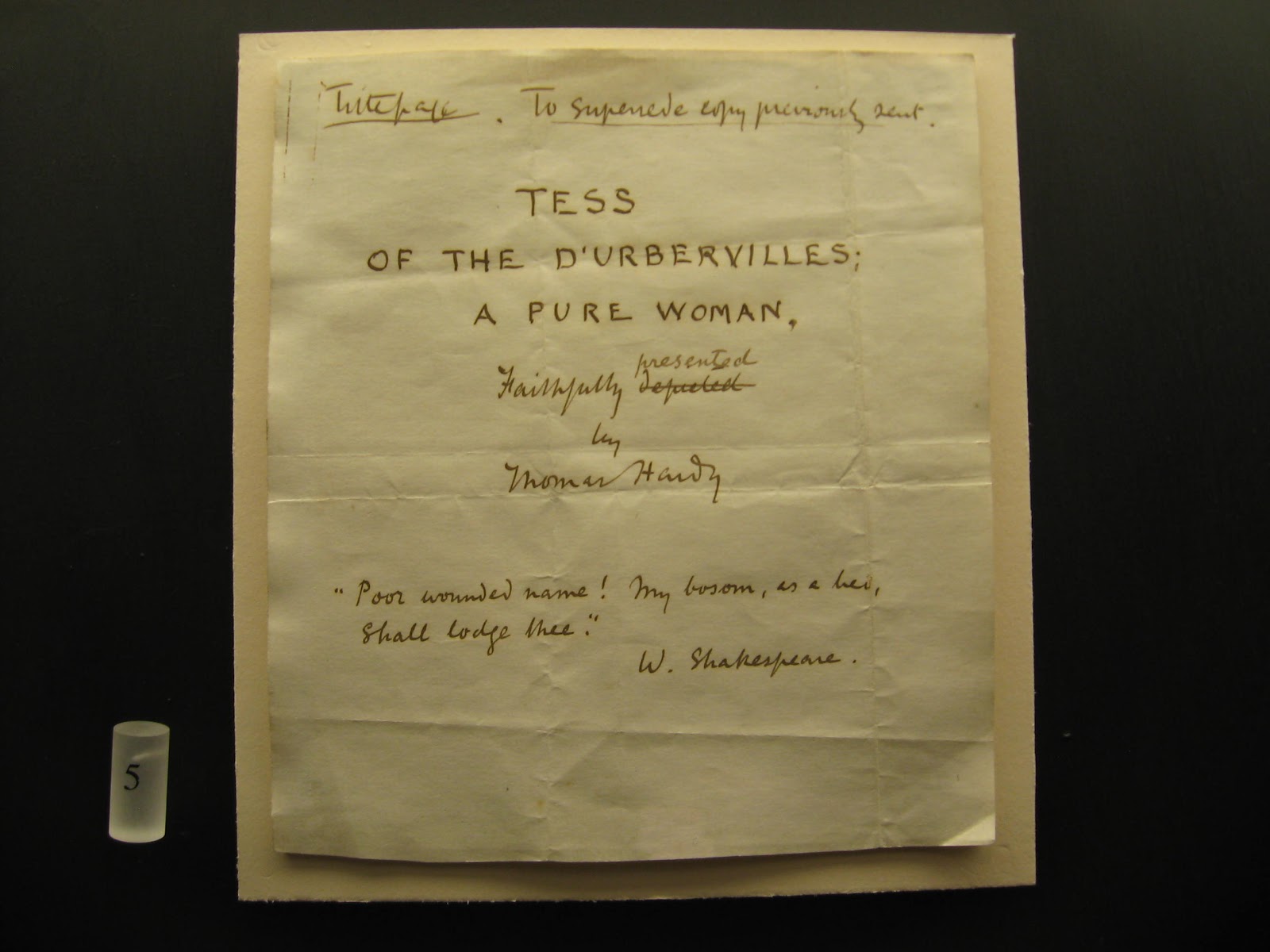
In the winter of 1979 I was given a present that transformed my teenage reading habits and initiated me into the world of great literature. Thomas Hardy’s Tess of the d’Urbervilles was a Christmas gift from a friend at the Manchester city centre tax office where I worked. From the very first chapter I was drawn into Tess’ life, entranced by it, by her. Within the year I had read the novel three times, mostly before 8.00 am on the Number 167 bus, where I was one of many passengers making the daily commute into work. The bus journey, and indeed my own life, faded into the background as something to be endured while awaiting the next opportunity to immerse myself in the novel.
         Tess of the D’Urbervilles was my first encounter with Hardy’s Wessex* and even though I progressed on to others of his masterpieces, it has always remained my favourite. Jude the Obscure came next and whether it was coincidence, synchronicity or entirely meaningless, the fact was that Jude’s struggle - against the rigid class system of his time - to enter university - mirrored my own endeavours. Every evening and all weekend, whatever free time I had, was devoted to studying for my A levels. University, a degree, offered me an opportunity escape the daily tedium of office work and the chance to spend a few years just reading books, aka becoming a full-time student. Jude tragically failed because circumstances, or to use Hardy’s own words, fate, was against him. I was more fortunate. 
      And so it was that when I passed my A levels I set off on a “pilgrimage” to Wessex, to the home of the man I owed my enlightenment to, Thomas Hardy. Hardy, of course, died in 1928 at the age of 88. His birthplace in the Dorset village of Upper Bockhampton, had been acquired by the National Trust and was open to the public. It is a pretty, neatly thatched cottage surrounded by equally pretty gardens. The visit, however, gave me little insight into whatever vicissitudes the Hardy family had faced almost 200 years ago. Plodding through the house in the company of half a dozen other visitors and led by a guide whose deadpan voice reeled off all the relevant facts, it was difficult for me to get a sense of the man. I couldn’t feel a connection when I sought Hardy’s presence in this, his family home. Just for the record I took a few photos and departed, heading down Bockhampton Lane toward Stinsford Churchyard, where Hardy is buried together with other members of his family.
Three decades later I returned to Stinsford. On an unusually warm Saturday morning last August, I took the Southampton to Dorchester train in the company of my friend Jane, who had first introduced me to Hardy with her Christmas gift so many years ago. We were both excited about visiting Max Gate, the house that Hardy designed (he was a skilled architect) and had built for himself and his wife Emma on the outskirts of Dorchester. While I was enthusiastic about visiting Max Gate, the main reason for my journey was to satisfy my curiosity. Something uncanny had happened in 1981 when I visited Hardy’s grave and I had been yearning to return to Stinsford in the hope that a second visit would shed some light on that experience.
Jane and I walked from the train station along Arlington Avenue out to Max Gate. The house stands in its own 1.5 acre grounds, close to the busy A35.  We passed through the gates and followed the short driveway up to the house; as we stepped on to the porch I noted the sound of birdsong, but only as a feeble competitor with the roar of traffic. It was an uneasy blend that accompanied us throughout our tour of Max Gate, a soundscape that Thomas Hardy would not have been acquainted with. 
Max Gate was disappointing. Neither Jane nor I felt Hardy’s presence in the rooms we passed through, not even in his study where he had produced his best work, including Tess and Jude. Visiting his home should have been a rewarding experience; but I was unmoved. I began to wonder whether my enthusiasm for the great writer had faded over the years. However, as we were preparing to leave, Jane glanced at one of the leaflets an American lady had given us in the downstairs reception area upon our arrival. It was then we understood that very little of the furniture from Hardy’s time remained in his home. Dorset County Museum, for example, had acquired the original furniture from the study, which it has used to recreate the room as it was in the writer’s day – but behind a glass wall - as we discovered later on that afternoon.  To me, Max Gate felt as if it had been divested of something essential; part of its personality was missing.  
The walk from Max Gate to Stinsford Churchyard took longer than we expected. Not having a map, we decided to follow our instincts and found ourselves tramping through fields of nettles, aka delightful meadows.  Exasperated, Jane retrieved her “sat nav” from her bag. I groaned; it seemed sacrilegious to use 21st century technology in a quest to find the grave of this quintessentially 19th century writer. As it was, the device could not or did not recognise our location, so on we went.  Eventually we discovered a signpost directing us to Stinsford; we followed the pathway in hushed appreciation of the beauty of our gentle unspoilt surroundings.
The scent of newly-mown grass in Stinsford Churchyard blended with the heat just as it had done on that day in 1980 when I had first visited. I walked up the slope toward St. Michael’s. Many of the graves I passed dated back to Thomas Hardy’s time and earlier. Sadly, the church was closed. It was here – around 150 years ago - that Mr Shirley, the vicar, infuriated the young Thomas Hardy one Sunday by criticising the endeavours of the lower class to improve their lot in life by joining the professions. This was very possibly the place where the author experienced what became a life-long aversion to the Church and the class snobbery typical of its clergymen.
Thomas Hardy was drawn to this churchyard again and again from his earliest years. His parents, grandparents, sister and his first wife, Emma, were buried here before him. It was not unusual for him to stroll to Stinsford from Max Gate with visitors and point to the spot where he wished to be buried. When others left, he often lingered here alone. One hundred years ago, in November 1912, he placed a wreathe on the grave of Emma “From her lonely husband with the Old Affection.” On Christmas Eve 1919 he told Florence, his second wife, that when he was arranging some holly on his father’s grave, he’d witnessed a ghost. They exchanged a few words but it vanished when he followed it into the church. 
Looking down at the grave of Thomas Hardy, that uncanny sense of something-being-not-quite right filled me once again. It was the same feeling I had experienced earlier in Max Gate and also many years ago in the cottage at Upper Bockhampton, Hardy’s birthplace. The inscription reads, “Here lies the Heart of Thomas Hardy OM”. His heart was a concession to the writer’s family and to his last wishes, as expressed in the will, to be buried alongside his kin. The remainder of the corpse was claimed as belonging to the nation and taken off to be cremated and buried at Poets’ Corner in Westminster Abbey.
Thirty years ago. I was standing in this churchyard when a powerful and unexpected sense of déjà vu overcame me. It seemed to rise up from the earth and hold me to the spot. I didn’t know how to explain it then and still don’t now; but that sensation seemed to justify the nostalgia that fills me whenever I visit Wessex. I scanned the churchyard, hoping to recognise the spot…
I’d come here seeking to relive that unique moment in my life, hoping to make another connection with something mysterious. Leaving Stinsford Churchyard, I understood that I hadn’t failed. Nostalgia, yearning, melancholy, the pathos that forms the essence of Hardy’s genius is here for anyone who opens to it.
I leave the final word on pathos to the master himself:
Winterborne’s fingers were endowed with a gentle conjuror’s touch in spreading the roots of each little tree, resulting in a sort of caress, under which the delicate fibres all laid themselves out in their proper directions for growth …
“How they sigh directly we put ‘em upright, though while they are lying down they don’t sigh at all,” said Marty.
“Do they?” said Giles. “I’ve never noticed it.”
She erected one of the young pines into its hole and held up her finger; the soft musical breathing instantly set in, which was not to cease night or day until it should be felled – probably after the two planters should be felled themselves.
         “It seems to me,” the girl continued, “as if they sigh because they are very sorry to begin life in earnest – just as we be.”
  The Woodlanders, Thomas Hardy  

Sunday, October 28, 2012

The Graveyard Chronicles - Friar's Bush


"In ancient times as peasants tell 
A friar came with book and bell 
To chaunt his Mass each Sabbath morn 
Beneath Strathmillis trysting thorn"*

Summer, at least here in the northern hemisphere, is already a memory. In Ireland the nights are growing longer and the fading sun yields earlier each afternoon to the reign of the October moon. Darkness is ushering in the autumnal equinox, a time revered by the Celts because it was then they believed that the veil between this world and the other mysteriously lifted, allowing the souls of all those who had died during the year to pass beyond it. They called the festival Samhain (pronounced Sah ween); today we celebrate it as Halloween. As the date approaches I find myself casting more than a passing glance at the headstones in the City Cemetery and wondering. Its ancient pathways beckon, and momentarily I consider doing my own private midnight tour in honour of the mystery. But I don’t have the courage. It’s a dark and spooky place when the moon rises and that’s tempting, but it’s the living I fear, not “visitors” from beyond.
         Friar’s Bush graveyard, the oldest Christian burial site in Belfast and one of the oldest in Ireland, organises Halloween tours. “Safety in Numbers” I think as I pick up the phone and call the City Council. An official informs me that the tours have been cancelled for the foreseeable future; however, I can still visit the graveyard … during the day and in the company of its custodian, Gerry Ward.
         Gerry is retired and lives in the old gatehouse of Friar’s Bush. He’s delighted to have a visitor and disappears briefly into the darkness of his home in search of a thick jacket and the key to the padlock securing the iron gates of the graveyard. These gates have been closed to all funerals since 1869, excepting those who already have a family plot in Friar’s Bush. We step through them and on to Paupers’ Path, the only route through this two acre site. Dotted around us are headstones, some barely visible above the long grass and fallen leaves; a small number of Celtic crosses stand tall, in defiance of the encroaching ivy and blackberry bushes. A single magpie squawks noisily from high up in the nearby elder tree. An air of abandonment prevails.

We tread Paupers’ Path, following it to the centre of the graveyard, where a large bush, an entanglement of blackberry and ivy, marks the site that gave this graveyard its name. “In days of yore”, Gerry explains, during the times of the Penal Laws (1691-1793), mass was celebrated here by a friar who was smuggled into Belfast on Sundays. He was reputedly shot dead on the spot, in front of the very bush where he performed the sacrament, hence the name.
         Gerry tells me there is some evidence suggesting that a friary once stood on this spot, until 15th or 16th century. No trace of it, no ruins remain except for a single stone block, which he leads me to, just a few paces away from the spot where the friar was reputedly executed. It is relatively small and the well worn round scooped out section embedded on one side is understood to be the holy water font in the ancient friary. Something whispers that the solemnity I sense here was indeed born from the wise and dignified rituals once performed on this site… and from the immensity of human suffering that this graveyard has witnessed.
Numerous are the headstones here which speak of tragedies so appalling that words cannot begin to convey them. Poverty, sickness and starvation conspired to cut short the lives of almost two million people in and beyond the Irish famine of 1845-1850. Tombstones bear the names and ages, and that is all we need; our imagination does the rest:
James Bracegirdle erected this headstone in memory of his grandmother Susanne Donaldson, who departed this life on 23rd March, 1847, aged 83 years. Also six of his children. Susanna aged 2 years, Matthew aged 7 years, Jane aged 1 year, William aged 12 years, Jane aged 14 days, Also William Matthew aged 7 years.

The Bracegirdle’s headstone is a testament to their life and their death; hundreds of thousands of others were interred in anonymity. The famine pit is a large grassy mound beside the gate lodge where toadstools and Japanese knot weed abound. According to the plaque 800 people are interred here, victims of starvation, cholera and typhus, which spread throughout the city in the 1830s and 1840s. Gerry maintains that although the plaque states 800 were buried here, then he corrects himself, “dumped” here, there is strong evidence to suggest that the figure is closer to 2,500-3,000. Plans in the 1920s to “shave off” this part of Friar’s Bush and build a road across it were abandoned because of fears that typhus and cholera spores might be released into the atmosphere if the earth were moved. “It is thanks to these people that this land still belongs to Friar’s Bush,” Gerry adds.

I ask him about the ivy-covered mausoleum standing in the centre of the graveyard. “That was erected by a wealthy publican to secure his body from the grave robbers.” He affirms that many people were afraid the “resurrection men,” as they were called back then, would dig up their corpses and sell them to the medical profession for the purposes of dissection. Historically, the most renowned grave robbers were Burke and Hare, and they operated in Scotland, but “they were Ulstermen”, Gerry stresses. Another pair of body snatchers, Stewart and Feeney, was active in Belfast at the time. In 1823 the News Letter reported how, after a tip off, the authorities boarded a ship leaving the harbour one evening and found the concealed bodies of a mother and her baby, who had been buried that same afternoon in Friar’s Bush.
Gerry tells me he has lived in the gate lodge for twelve years. When I comment on his “unusual back garden” he smiles. “That’s true, but I have to share it with the residents”, he says, gesturing toward the headstones. Before he leaves, I ask about the Halloween tours,
“They were great fun and very popular. Busload after busload arrived at Halloween and we all laughed so hard, the ghosts and vampires probably as much as the visitors. I suppose we could have given somebody a heart attack, creeping around like that in the darkness.”
The Council, who own the cemetery, also thought that it was too dangerous; “and now it’s very quiet here at Halloween, just like every other night…” With that, Gerry leaves me to wander around on my own and take photographs.
I pause by the Bracegirdle headstone to imagine this site before the famine funerals, before the penal laws, before it was claimed by the friars, as it was then, as Cromac Wood. The forest stretched from Belfast city centre up through Stranmillis, where the cemetery is located, and further south to the affluent Malone neighbourhood. Leaves flutter and spin around me, falling like confetti when stirred by the autumn breeze. The lone magpie cries out again. Darkness is already descending even though the clocks do not change for another few days. The moon is rising and it’s time to go home, but not without a pang of regret that the Halloween tour is now, like the lives of all those interred here, history.
  
* An extract from the poem Joseph Campbell (1905) dedicated to Friar's Bush graveyard.

Sunday, October 14, 2012

Belfast 3 Southampton 5. The winner is Belfast


 “Fuckin’  ‘ell” were the first words I heard on my arrival in England at the start of summer. A hearty welcome to that green and pleasant land, it certainly was not. Moments before, I’d stepped down from the train on to the platform at Southampton Central and had begun wheeling my suitcase – with its bright red “HEAVY” warning tag – in the direction of the lift. A sudden bump caused me to turn around. The case had collided with a set of male toes, fully exposed in a pair of blue and white flip flops. My mumbled apology only brought forth a look of disgust, so I hastened onward to the exit and out into my new life in Southampton.
         It was an ugly beginning to what turned out to be a great summer.
         Initially I’d been hesitant about accepting the offer of work teaching at the university. The move, even if it was just temporary, meant leaving the comfort of my own home and the company of friends for three months. I was weary of airports and reluctant to undergo yet more upheaval in my life. In the course of less than a year I’d moved out from Belfast to Tarragona and from Spain back again to Ireland. In the end, it was circumstances - no work at home - that forced me to pack my suitcase and head for Southampton.
         Like many others who arrive at a new destination, I tend to fall into the trap of making constant comparisons between where I’ve arrived and where I’ve come from. On that first afternoon it rained incessantly (and it was to continue raining for a further two weeks); even the weather in Ireland was better. Belfast 1 - Southampton 0. My student room was cell-like in size and austerity, and the coffin-sized single bed there did not promise a decent night’s sleep. 2-0 As soon as I’d unpacked I set out in search of a supermarket; cabin fever would have to wait for another few days before I succumbed.
The grounds of the student residences are bordered by dense forest and the picnic tables on extensive lawns presided over by ancient yew and pine trees suggested that one could hope for better/dryer weather. On that first afternoon, what struck me was how unusually trusting the blackbirds were. They remained unconcerned by my approach; at most, they hopped a couple of paces and turned nonchalantly to watch as I sidestepped the puddles and strode on toward the bus stop. And so it was for the rest of the summer. Each time I passed within a couple of metres of a blackbird, I pondered on the difference between the somewhat skittish Irish blackbirds and their more chilled-out English cousins. I found no explanation but I thought it a good omen. 2-1.
Standing at the bus stop, I was astonished by the number of cyclists who squished by under the deluge. Keen hardly began to describe these cyclists; stoic I believe was more fitting. Judging by the number of cycle lanes, Southampton City Council was endeavouring to accommodate them. The entire route from the halls of residence to the city centre could be travelled on a bike in cycle lanes that ran adjacent to, and sometimes through, the New Forest. 2-2
         When the rain eventually called a truce and the barrage of water between me and my new surroundings withdrew, a few tentative conclusions I’d drawn in the first days were confirmed. English gardeners are, generally speaking, keener than their Irish counterparts. 2-3 The care bestowed upon many of the household gardens I saw throughout my summer in Hampshire, the attention to colour and symmetry was a tribute to their owners’ creativity and perhaps a reflection of the nature of their connection with the land. Indeed, a number of the gardens had a certain ambience that only a scrupulous choice of shrubbery and plants could evoke. The ones I loved best, and there were plenty of them, were the mature cottage-style gardens. So, why is it that, generally speaking, Irish gardens lag so far behind those in Hampshire? It could be that the climate is harsher here or possibly that, historically, the value of land in Ireland is measured in agricultural terms, as opposed to the aesthetics of pleasing the eye and the soul. In a country which has suffered the loss of around 40 per cent of its population to famine, this is a plausible explanation. It’s also plausible that widespread evictions from smallholdings in the decades and centuries preceding the famine of 1845-1849, weakened the population’s attachment to land that wasn’t theirs, and for the vast majority of Irish it wasn’t.
         An awareness of aesthetics may also have played a role in the absence of “orange faces” amongst younger women in Southampton. Fake tans, poorly applied fake tans, are endemic in the north of Ireland. 2-4 Having white skin is eschewed in favour of hues that range from tangerine to chocolate brown. Joints, namely elbows, knees and fingers become a grubby mess of streaks that is an even darker hue than the rest. Combined with copious quantities of makeup and bleached blonde hair, the overall effect is artificial at best and caricatured at worst. The orange face syndrome is, of course, mostly class-based and therefore more prevalent in working class areas where young women mimic celebrities whose privileged lifestyles will forever be denied them.
         It seemed to me that the English love the word “no” and they also like the preface “Do Not”. Signs prohibiting this and that are posted liberally throughout the city and surrounding countryside. On a number of occasions while walking through a remote part of Hampshire I suddenly come upon a warning forbidding me to do something it wouldn’t have crossed my mind to do. Respect for the law and rule of law is much greater than in the north of Ireland. When I returned home briefly for one weekend in July I was struck by the prevalence of anti-state graffiti daubed on the walls throughout my neighbourhood. “F**K the RUC/PSNI“ (the police) and other such unambiguous messages made it abundantly clear how the rule of law is perceived in some parts of Ireland. 3-4
         Finally, there is no ambiguity at all about which city wins when I compare my journey to work in Belfast with that I took in Southampton. Daily, I walk a sullen treeless route to the university that crosses two warring neighbourhoods via the “no man’s land” of a motorway roundabout. In Southampton I followed a pathway through a forest of mature oak, pine, beech, sycamore and chestnut from the halls of residence to the campus where I taught. On the summer mornings when I started out early for work, birdsong and the occasional rustle of leaves stirred by the breeze were the only sounds accompanying me through the forest. Regardless of how many times I followed the path, it never lost its charm. 3-5.
         And yet when my contract at the university finished in mid September I left Southampton with few regrets. I was ready to return to Belfast. I’ve no plans to swap the comfortable familiarity I have with this city and the ways of its people for new terrain, no matter how enticing that terrain might be. It’s a cliché but for the time being at least, home is most definitely where the heart is and mine has fallen for a cold, damp, grey city in the north of Ireland. Warts and all.

Tuesday, October 2, 2012

Welcome home Fenian B*****d


One week ago my holiday ended. My flight left Barcelona at 6.00 in the afternoon in bright sunshine and temperatures of 27º. Just over two hours later our steward opened the doors on to darkness, wind and rain. Passenger after passenger descended the steps, many of them in flip flops, complaining about “Norn Iron” weather. Not me. I was elated, relieved to be home after an absence of three months. My spirits continued to soar even as I wheeled my suitcase through puddles in the deserted streets of Belfast city centre.
         Last Saturday morning the balloon burst and I came tumbling back down to earth. While on my way to the market in the city centre I crossed paths with one of the biggest marches by Orangemen in recent years. Around thirty thousand of them were commemorating the centenary of the Ulster Covenant, signed in 1912 by Protestants opposing Home Rule for Ireland. I halted at the kerbside while lines of marching men filed by to the sound of brass bands and military drum beats. Uniformed brigades were followed by their comrades wearing black suits, bowler hats, orange sashes and grim expressions.
         All this is standard for an Orange parade. I’ve seen many on television news clips but rarely have I been physically present at one, and if so, only by accident, which was the case last Saturday. An Orange march is not a place for a Catholic, for any Catholic, regardless of sex or age. Still, I wasn’t concerned for my safety as I deliberated on how I could continue on my way to St. George’s Market, for that was my plan. To cross the ranks of these men and they were, without exception, all male, is to run a risk. But I was becoming impatient, and so too was a man on the other side of the street, who stood regarding the seemingly unending parade with despair. Finally, after glancing at his watch, he picked up his suitcase, appeared to take a deep breath, dashed through the lines and headed over to the train station behind me. Dozens of bowler-hatted heads turned to follow him; there was murder in their eyes but, fortunately, all that rained down on him was abuse. Nobody thumped him (this time).
         It was while I was trying to summon up the courage to do the same that I overheard a remark about the “Fenian Bastards”. It’s a term of abuse used by Orangemen and their supporters for Catholics, and what stunned me was not the contempt, but the casual deep-rooted hatred behind the remark. I glared at the speaker in his neatly pressed black suit, orange sash and bowler hat, struck by the incongruity between his civilised appearance and his loutish bigotry. The rage I experienced brought an equally offensive rejoinder fluttering on the tip of my tongue, but it was fear that held it in check. “Had you spoken, they would have killed you,” my friend Roisin said later. I looked down at my green – all green – shirt and immediately felt vulnerable. When the march paused briefly, I dashed through the ranks murmuring apologies to the black suits and orange sashes. Minutes later I was surrounded by organic fruit and vegetables, relieved to be away from that sinister scenario.
         That same morning one of the bandsmen was pictured urinating in the entrance to St Matthew’s Catholic Church in east Belfast. At St. Patrick’s in north Belfast, where a loyalist band had played a sectarian tune that provoked days of rioting earlier this summer, the bands were bound by a legal ruling to play only hymns as they passed by. UTV video footage shows the Lambeg drum* being hit with such force outside the church that the hymn can barely be heard. The band was reported to have struck up the beat of The Sash** while still well within earshot of St. Patrick’s. Other video footage shows Nick Griffin (MEP), leader of the extreme right-wing British National Party, in attendance. “Fenian Bastards” was the term he used to respond to criticism from Irish Nationalists (Catholics) that day on his Twitter site.
         Throughout the summer, when I was teaching in the south of England and taking a holiday in Catalonia, my thoughts rarely dwelled on the political situation in back home, not even during those three days of rioting. When I’m here I take little interest in local politics because they are just too depressing. It’s a cop out, I know. By copping out I’m choosing to ignore that I don’t live in what passes for a normal society. The casual hatred with which that remark was made on Saturday morning, and subsequent behaviour, makes it very difficult to carry on pretending.
        
* A powerful drum popular with loyalist marching bands. Legend suggests that it was brought over from Holland by William of Orange’s troops, who fought and defeated the Catholic army of James II at the Battle of the Boyne in 1690.
**A favourite of marching bands which celebrates the defeat of the Catholic army at the hands of William of Orange. 

Monday, October 1, 2012

The Legacy of the New Forest


I’m standing on platform 2 at Brockenhurst train station in the New Forest, Hampshire. A mild scent of humid earth floats in the air from the grove of oak, chestnut, sycamore, beech and hazel that has edged up to the railway lines. The chorus of birdsong is dominated by the squawking and chattering of a population of magpies. I check in my bag for my ticket. The last time I stood on this platform I was laden with a rucksack and tent, thrilled to be going on holiday with my friend Jane. That was thirty years ago and the station doesn’t appear to have changed at all since then. Indeed, there’s a quaintness about it that I associate with early last century. Jane is with me today and she too notices the apparent timelessness of this place. I look at her and see only the features of my eighteen-year-old companion on the face of a woman whose adult life I knew nothing about until our reunion this morning. She has travelled down from the north of England to join me on a pilgrimage today, on a journey that pays homage to the sunshine-filled holidays of our youth.
My thoughts about our miraculous reunion are interrupted by yet another security announcement on the station tannoy. Momentarily, the birdsong ceases and I glance around at the half dozen or so travellers “loitering” on the platform, wondering how I might define suspicious activity and whether it would be suspicious enough for me to inform the police, as the tannoy urges. England has changed. Official obsession with terrorism is transforming this society into a police state where citizens are regularly encouraged to inform on each other. Trust is being replaced by a wariness that creeps just below the surface of the English tendency toward reservation.
At eighteen years old my reserves of trust were infinite. Three decades of life experience have depleted those reserves and I feel that loss now, standing in the place where I giggled excitedly with Jane in anticipation of what was up ahead, of our freedom. We travelled down from the industrial north each summer, escaping into a world where Nature was just a few footsteps away and where a rustic lifestyle still prevailed. Both of us were both passionate about the Wessex of Thomas Hardy; in it we were seeking a world more authentic than our 9 to 5 routine in a Manchester city centre government office. But we were also young and hoping for adventure. The New Forest gave us both.
The train to groans to a standstill and hisses before the doors open to the accompaniment of repeated warning beeps. We board an almost empty carriage. Our station is Lymington Pier, the end of the line, and just two stops away. Now, as then, we cry with delight at the first sight of New Forest ponies chewing unhurriedly on the heath land grass and deer that vanish with a single bound into the nearby hazel copse. Our conversation is pure nostalgia; nearly all our sentences begin with “Do you remember the time that …” and are invariably followed by prolonged laughter. Three decades-old photos we have brought with us prompt the memories, but some remain elusive. I have a photo I took of Jane standing by her bike, reading a map, but no recollection of that day. Today we are back together again, returning with our memories to the locations where they unfolded. 
The station at Lymington Pier has to be unique in England. Take a step down from the carriage and you are on the wooden pier-platform; take a few more steps and you can lean over the railings and gaze down into the sea. At the end of the pier, the Isle of White ferry waits with its bow door gaping, ready to accept passengers bound for Yarmouth. Jane and I head inland, in search of South Baddesley Road, which will take us to Norleywood, to the youth hostel where we pitched our tent, the base camp for our daily excursions. It’s early on Friday afternoon and this country road is quiet, so quiet that we can hear the bees hum softly on the honeysuckle and foxglove in the hedgerows. Horses whinny in the distance and a breeze flutters, giving us momentary respite from the heat.
The road takes us past Winter’s Wood, Church Copse, and Otter’s Hill Copse. I still recall the January afternoon I sought out the ordinance survey map from the previous summer just to touch these names, willing myself to be far away from Hulme, Salford and Bury. After about twenty minutes walking, we come upon a large red brick house with 18th century features, crowned by majestic turret-like chimneys. We both remember it. Perhaps Hardy passed by here, by this very “Gatekeeper’s Lodge” and it inspired him to create one of his many troubled characters. “You were troubled too, Karen” Jane remarks, “even back then.”
At the crossroads we turn left into an even less-travelled road. A Montessori School stands at the junction and Jane comments on the idyllic location. It is one of the very few buildings in a landscape of unbroken greenery and it too is ancient, an ancient primary school, the setting of what were possibly the happiest, unclouded years of many generations’ lives. The road becomes even narrower once it winds around to the right. On both sides there are pathways disappearing into forest glades that beckon to be explored. 
At “the splash” we pause on the bridge to take photos, posing in postures that match the ones in the snapshots I have in my bag. Then our memories fail us. Do we turn left or right after “the splash”? Jane raises her hands in surrender and so I suggest left. This takes us into the hamlet of Norleywood but no closer to our destination, the youth hostel. The homes we pass are a display of wealth; one or two of their owners eye us curiously as we stroll by. The single bus stop in the hamlet, under siege by encroaching privet and beech, gives us a clue to the location of the hostel. Beyond it stands the familiar large red brick house, but the height of the fence and the density of the hedge make it difficult to see into the extensive garden; the tall wooden gate does not offer a better view. We follow the hedge around into the adjoining unpaved lane. Toward the back there is another gate from where we can see the property. It’s definitely Norleywood Youth Hostel, or rather, was. The lawn remains just as when Jane and I camped there. I focus on the grass in the spot we always chose to pitch our tent, seeking some clue to the girl I was then. But memories are the only connection I have; they’ve brought me here and now I feel I’m a ghost.
“I think that’s a private house” a young woman smiles at us, while adjusting her position in the saddle. Her mount adjusts the position of the bit in its mouth. She doesn’t know anything about a youth hostel ever being in Norleywood,
“That must have been many years ago. I‘ve grown up here and for as long as I can remember that house has been privately owned.”
However, she does know where the East End Arms is and points us in the direction of a nearby bridle path that crosses the fields to the pub. We climb over the stile and follow the path through tall seeded grass studded with burrs. In the silence my thoughts dwell on our preparations in the tent for nights in the pub. Sponge rollers, spot concealer, eyeliner, lipstick, cork-soled wedgies and frantic efforts to smooth the creases from our denim skirts and gypsy-style tops preceded our unwieldy advance along this very bridle path and over the stile at the other end. 
         At eighteen, Jane and I caused a sensation among the East End Arms youth. For them we were exotic visitors from the North while they, for us, were the very rustics who populated the works of Thomas Hardy. In Pog, Peter, Ned and their friends we allowed ourselves to believe that we were reunited with the denizens of the woodland we had encountered in the Wessex novels. The friendship lasted three summers and memories sparkle with midnight strolls to a chorus of cricket chirping along the bridle path back to our tent, and parties in barns at the end of labyrinthine country lanes.
The pub hasn’t changed at all. The exterior is identical and even the arrangement of furniture in the bar where we sipped numerous Babychams matches my recollections. On the wall Jane finds an explanation: a large press cutting recounts how Dire Straits guitarist John Illsley purchased the property in the 1990s and vowed to keep the bar intact, just as it was. And he did. But there is no sign of Pog, Ned or the others.
         “We probably wouldn’t recognise them anyway, even if they did walk in the door now. They’re virtually old men,” says Jane.
I’d like to ask at the bar but the barmaid looks like she may not even have been born at the time we were flirting with the locals and, besides, I never learned “Pog’s” real name.
         After our final trip to Norleywood a few letters were exchanged but contact faded as all our lives took different courses; Jane went to nursing school and I entered university, while agricultural college claimed some of our East End admirers. As for Pog, he was too attached to the forest to leave it. I turn to Jane,       
“Where is Pog now? What kind of life did that farmhand from another era end up having?”
Neither of us responds to my question and now we’ll never know.
As each holiday ended our hearts began to sink; and the train journey back to Manchester Picadilly was often a silent one. Each time I returned, my life in that grim city seemed even grimmer, and I’m convinced that the happiness, the sense of feeling supremely alive, we experienced in Norleywood led to our determination to initiate change. And both of us did. That is the lasting legacy of those summers in the New Forest.